Field notes
Peated whisky, where the smoke in your glass begins
Follow peat smoke back to the malt kiln, then use two small whisky cocktails to decide whether adding wood smoke at service improves the drink.
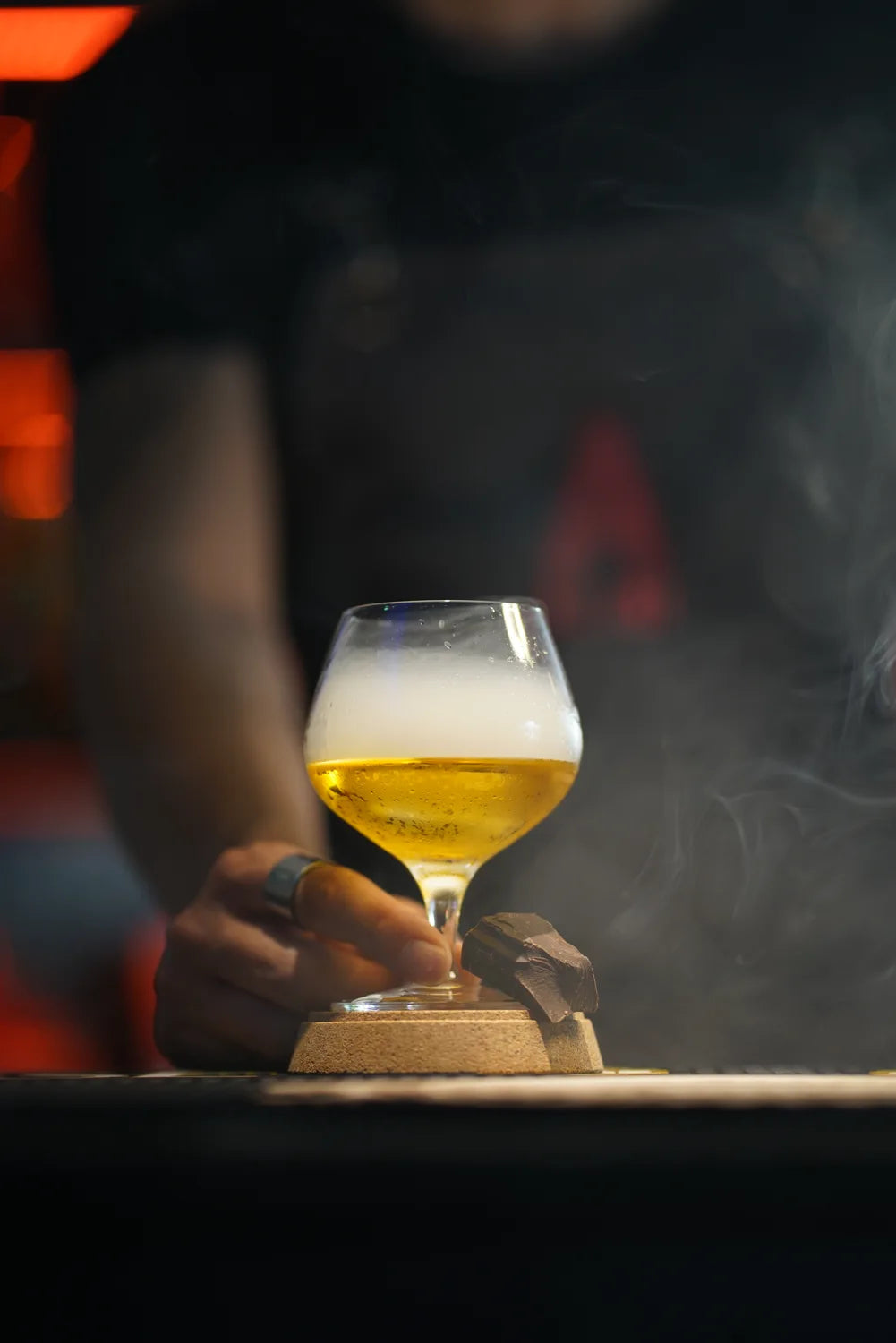
A drink at the Giamaio bar. Use the same whisky in both tasting glasses. · Giamaio
Pour a little peated whisky into a clean glass. The smoker is off, the glass has never been covered, yet smoke is already part of what you smell. Its route into the drink begins with the malt, long before a bartender picks up the bottle.
Back at the kiln
Kilchoman Distillery describes drying its malted barley after germination. When peat is burned in the kiln, smoke comes into contact with the malt. The spirit can already have a smoky character before it is bottled. The whisky you choose therefore sets the starting point for the cocktail.
Read the producer’s description and taste the base on its own. Write down what you notice first in your own words. A dry, ashy or earthy impression is a more useful note for your next drink than an adjective copied from the label.
Set two small drinks side by side
Make two small Old Fashioneds with the same whisky, bitters and dilution. Leave one as it is. If you want to try a smoke finish at service, introduce it only to the second glass. Use the same garnish for both. Look for the whisky’s original character in the first drink, then nose the second once the visible cloud has cleared.
Decide what the bottle already gives you
If the whisky, bitters and citrus are clear in the first glass but all you notice in the second is wood, serve the first. If the second adds an opening aroma and the whisky is still clear in the sip, record the gesture you used. In each case the decision starts with what the distiller already put in the bottle.
Sources and further reading
Kilchoman Distillery · Peat and single malt ↗ International Bartenders Association · Old Fashioned ↗